The 2030 Agenda for Sustainable Development, adopted by all United Nations Member States in 2015, provides a shared blueprint to achieve a better and more sustainable future for everyone.
Committed to the United Nations’s Sustainable Development Goal, Iqra University is making its mark by embedding SDGs within our governance, teaching, community initiatives, research and partnerships. Following programmes and events are led by IU Faculty, Staff and Students in the area of Goal 16: Peace, Justice and Strong Institution.
Our Student Societies for Peace-building and Sustainable Development
Students are crucial pillars for the development and prosperity of a society. Along with the primary responsibility of a student to acquire knowledge and wisdom, he/she also bears the responsibility to perform their duties as responsible citizens of the country and play their part in building thriving communities. Forming and/or being a part of students’ societies is an asset of a student life journey to showcase their talents and gain valuable experiences and learnings. As discussed earlier in the former sections, Students’ Societies are integral for achieving our objectives towards sustainable development. At Iqra University, various student societies and clubs have been formed which are dedicatedly working towards sustainability and corporate social responsibility. Following are some of the societies and clubs:
Community Initiative for JUSTICE for ALL
Iqra University has gathered its students, staff and the faculty members for a peaceful rally to demonstrate their unity and will to stand by the rights of the people of Occupied Kashmir. The rally was in response to the constant violation of human rights in Occupied Kashmir, where people have no access to basic rights of safe housing, clean drinking water, education, free mobility, internet and most worst of all, the recent longest running security lockdown that ended in 2021. The rally was followed by the discussion sessions with subject matter experts to understand the issue in depth and how the younger generation of both countries can drive a diplomatic solution.
Elected Representation of Students, Faculty, and Non-Faculty Staff on the University’s Governing Body
Iqra University promotes inclusive and participatory governance by providing elected representation for undergraduate and graduate students, faculty members, and non-faculty staff on its governing body. This representative structure enables key university stakeholders to contribute to institutional decision-making, ensuring that diverse perspectives are considered in governance and policy matters.
Recognition of Students’ Union and Its Role in University Governance, Student Support, and Social Activities
Iqra University, as a private-sector higher education institution, operates within its established institutional governance and administrative framework. Student participation and engagement are facilitated through recognised student societies, which function as independent, non-politically affiliated platforms for student representation, support, and social activities. These societies provide opportunities for students to contribute to university life, participate in relevant activities, and raise student-related matters through established institutional channels, without political affiliations forming part of the University’s formal governance structure.
Policies and Procedures for Identifying and Engaging with External Local Stakeholders
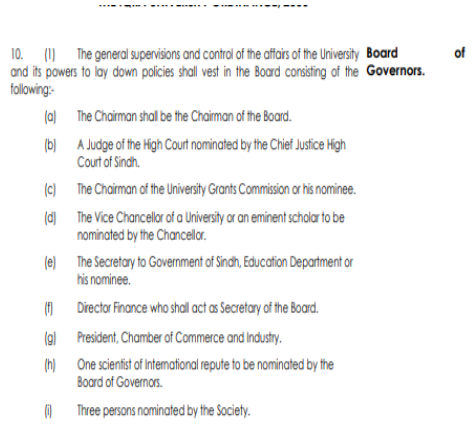
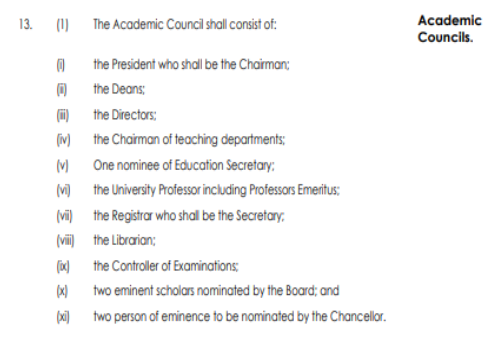
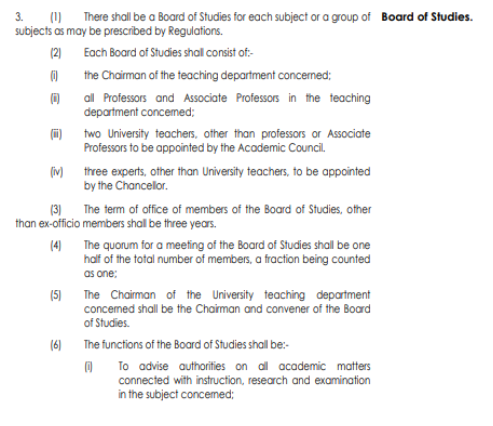
Iqra University demonstrates its commitment to transparency, inclusive governance, and community engagement through formal mechanisms for identifying and engaging external stakeholders, including government representatives, industry professionals, employers, and community organisations. In accordance with the University’s governing Act (Charter), the representation of local and external stakeholders in statutory bodies, including the Board of Governors and Academic Councils, is ensured. This enables external stakeholders to contribute to institutional governance, decision-making, policy formulation, and oversight, ensuring that local perspectives and community needs are considered in the University’s strategic planning and development.
University Principles and Commitments on Organised Crime, Corruption, and Bribery
Iqra University is committed to upholding integrity, transparency, accountability, and ethical conduct across its institutional operations and decision-making processes. The University’s published principles and commitments emphasise the prevention and addressing of corruption, bribery, organised crime, and other forms of misconduct. These principles promote responsible institutional behaviour, safeguard university resources, and strengthen trust among students, faculty, staff, and external stakeholders.
Policy on Academic Freedom Supporting Research and Teaching Autonomy for Senior and Junior Academics
Iqra University upholds academic freedom as a fundamental principle of its academic environment, encouraging independent thought, scholarly inquiry, and the free exchange of knowledge. The University supports both senior and junior academic staff in pursuing research in their respective areas of interest and expertise, as well as teaching and sharing their academic knowledge publicly within their fields of specialisation. This commitment promotes intellectual independence, academic expression, research excellence, and the advancement of knowledge across the University.
Transparency and Publication of University Financial Information
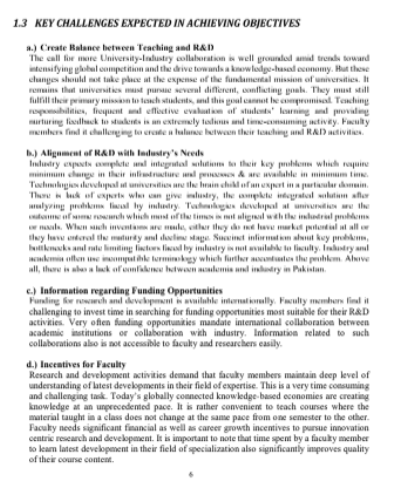
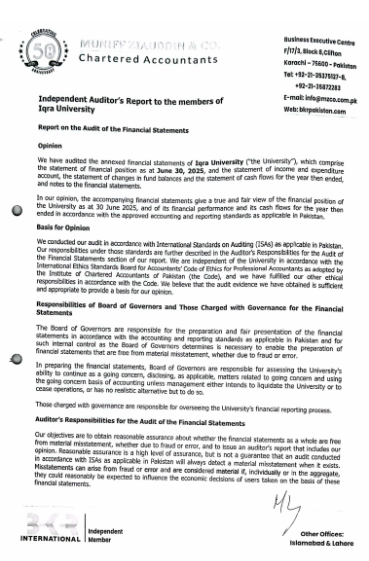
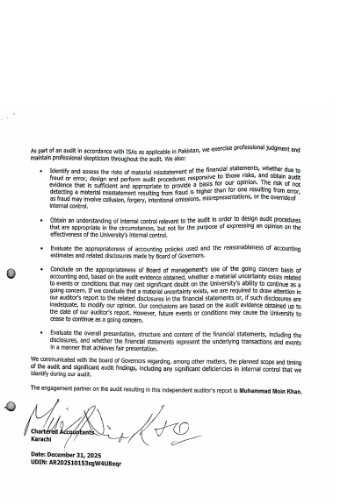
Iqra University ensures financial transparency and accountability through the preparation of its annual financial statements, which are independently audited by an external third-party audit firm. The audited financial information is subsequently reviewed and discussed by the Finance and Planning Committee, comprising representatives from local government, higher education, and local industry. This process ensures independent financial scrutiny, effective oversight, and stakeholder participation in financial governance and institutional decision-making.
Government Engagement through Expert Advisory Services, Policymaker Outreach, Capacity-Building, and Collaborative Research
Iqra University contributes its academic and professional expertise to government institutions through faculty engagement, provision of specialised advice, and participation in policy-related initiatives at the local and regional levels. The University also supports the capacity-building of policymakers and lawmakers through educational outreach, knowledge sharing, and professional development activities covering relevant social, economic, legal, and policy-related issues. Furthermore, Iqra University promotes policy-oriented research and collaboration with government departments and public-sector institutions to address societal challenges, support evidence-based policymaking, and contribute to effective governance and public-sector development.
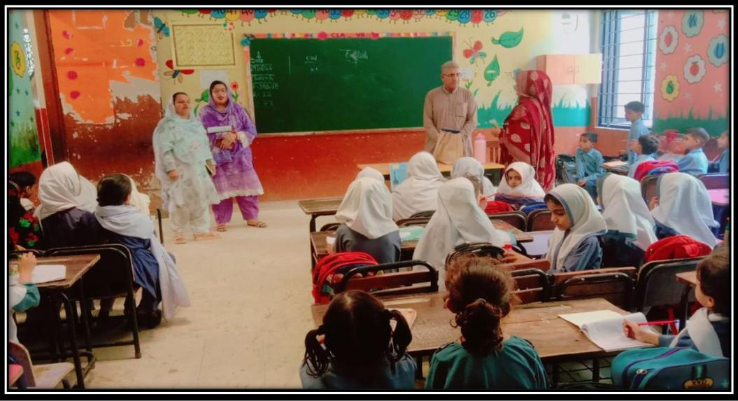
Figure 1. Dr. Habib Ahmed, Independent Expert from Iqra University, holds a review meeting with the school principal to assess school performance.
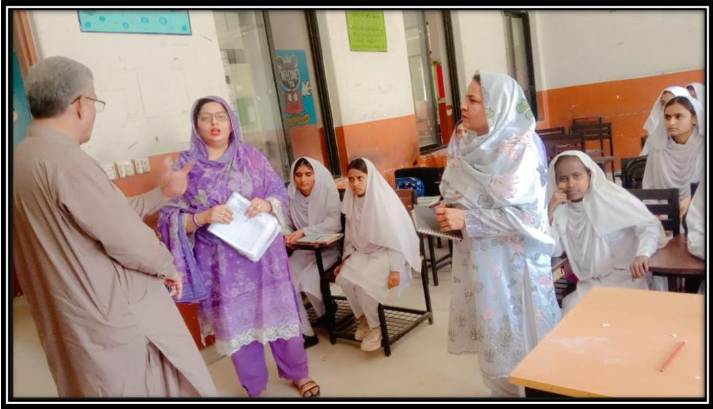
Figure 2. The Independent Expert observes classroom teaching and learning practices as part of the institutional review.
Figure 3. The Independent Expert conducts school monitoring and classroom observations
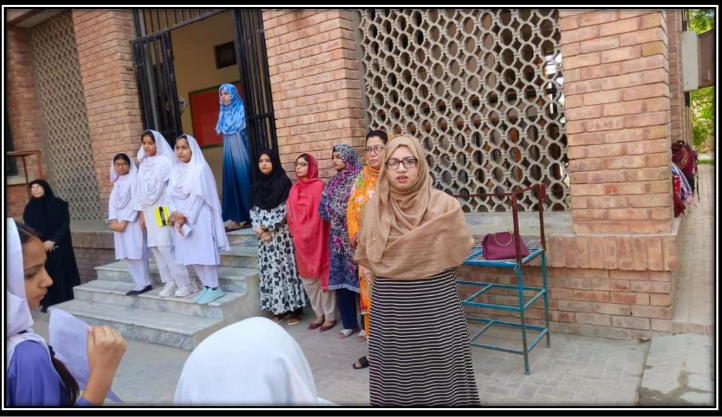
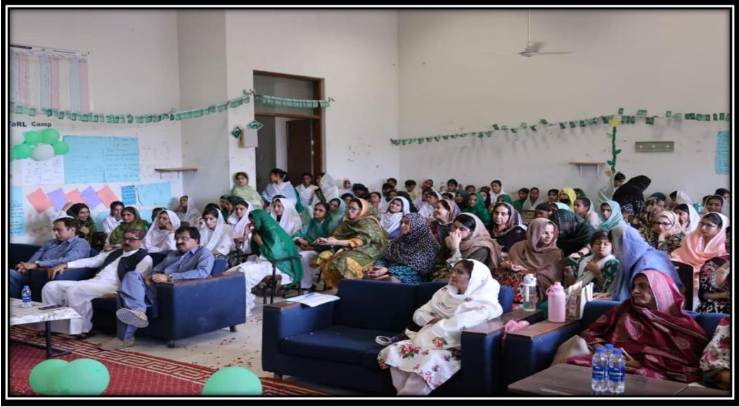
Figure 4. The District Education Officer (DEO), Sukkur, addresses students and teachers during the school’s Independence Day ceremony.
EXPERT ENGAGEMENT WITH GOVERNMENT INSTITUTIONS
Iqra University | SDG 16 – Peace, Justice and Strong Institutions
1. Purpose and Institutional Context
This evidence brief documents Iqra University’s expert engagement with a government educational institution through an independent expert review of the Quarterly Evaluation Report (QPR) for Government Girls High School Numaish Colony, Old Sukkur (SEMIS Code 418030006). The school was operated by Sindh Rural Support Organization (SRSO) under RFP-3, Year 9, Quarter 2, covering July–September 2026. The source report identifies Dr. Habib Ahmed from Iqra University as the Independent Expert and is dated 30 September 2026.
2. Expert Advice and Government-Facing Engagement
In his capacity as Independent Expert, Dr. Habib Ahmed reviewed the school’s quarterly performance, held a review meeting with the Principal, and observed classroom teaching, learning practices, and school conditions. The review considered school management planning, staff attendance and availability, student enrolment and retention, classroom overcrowding, lesson planning and assessment, teacher capacity development, maintenance, community engagement, and student health and hygiene.
The review identified priority issues requiring coordinated action by the District Education Officer (DEO), SRSO, and school leadership. These included ten unfilled sanctioned teaching posts, overcrowding in Grades V and VIII, the need for consistent lesson planning and consolidated student assessment records, a focused response to SSC-II failures, delivery of teacher professional development, and improved monitoring and reporting arrangements.
The report therefore provides documented evidence of Iqra University’s contribution of independent academic and professional expertise to the review of a government school, including evidence-based observations and practical recommendations directed to issues requiring action by the relevant district education authorities and school management.
3. Engagement with Government Stakeholders
The source report also documents the participation of the DEO, Sukkur, in school activities. The DEO’s presence at the school’s Mehfil-e-Milad and Independence Day observance, including an address to students and teachers, demonstrates interaction between the government education authority and the school community. This contextual evidence complements the Independent Expert’s review and illustrates engagement within the local public education system.
Neutral Platform for Open Dialogue Among Political Stakeholders
Iqra University provides a neutral and inclusive platform that encourages open dialogue, constructive engagement, and the exchange of perspectives among diverse stakeholders. Through academic discussions, seminars, conferences, and stakeholder engagement activities, the University promotes a respectful environment where different viewpoints can be shared and societal and governance-related challenges can be discussed openly and constructively.
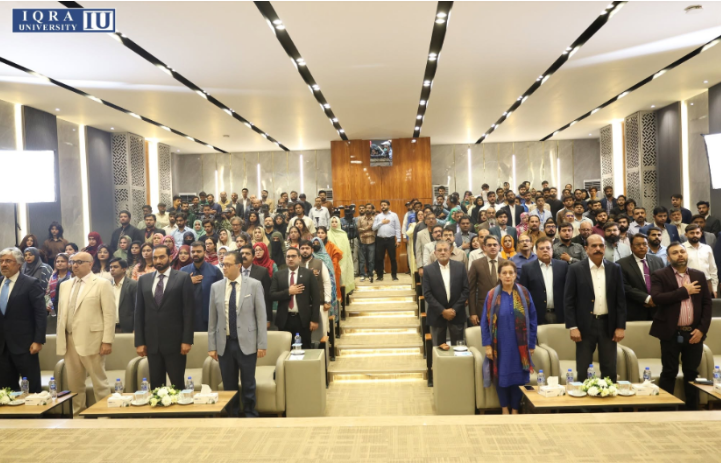
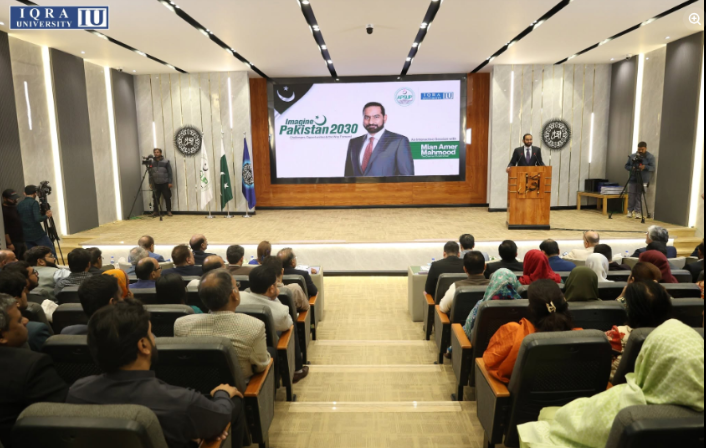
Iqra University hosted an insightful session titled “Imagine Pakistan 2030: Challenges, Opportunities & The Way Forward” under the APSUP banner, bringing together prominent stakeholders from Pakistan’s private higher education sector to discuss national challenges, governance reforms, educational development, and future opportunities. The session provided a constructive platform for the exchange of diverse perspectives on Pakistan’s future, encouraging dialogue on structural reforms, collaborative leadership, and the role of academia and industry in national development.