The 2030 Agenda for Sustainable Development, adopted by all United Nations Member States in 2015, provides a shared blueprint to achieve a better and more sustainable future for everyone.
Committed to the United Nations’s Sustainable Development Goal, Iqra University is making its mark by embedding SDGs within our governance, teaching, community initiatives, research and partnerships. Following programmes and events are led by IU Faculty, Staff and Students in the area of Goal 17: Partnerships for the Goals.
Our Commitment to SDGs
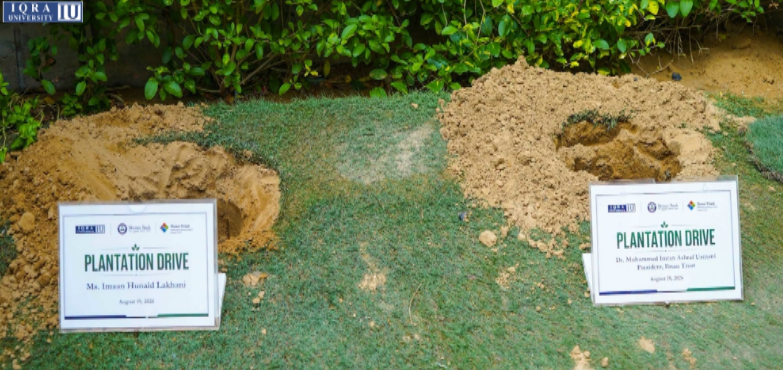
Iqra University is dedicated towards the attainment of Sustainable Development Goals at every level of our organisational practices, teaching & research and new initiatives. In order to build upon this ambitious vision we identify focus areas, set KPIs and enhancement plans on the existing initiatives to achieve the intended outcome by the end of the year. Year after year we are becoming a sustainable, efficient and smart campus, where we as IU Community have achieved some amazing outcomes such as Planting 1 MILLION TREES across Pakistan in collaboration with the Government Taskforce for countering Deforestation in the country and improving in ranking for UI Green Metric. Standing affirms with our Environment Strategy we are determined to double our impact in upcoming years.This was not possible without the support and confidence of our local, national & international partners who have worked tirelessly with us in achieving the dedicated SDG and accelerating our impact in every corner of the country.
International Partners
Public Institutions
National Private and Not for Profit Organizations
International Collaboration in SDG Data Collection and Measurement
The Principles for Responsible Management Education (PRME) is a United Nations-supported initiative founded in 2007. We have become the signatory of PRME to affirm our commitment towards aligning our practices, teaching & research with PRME Principles.
United Nations Academic Impact
We have officially become the member of United Nations Academic Impact (UNAI) joining a vast network of more than 1400 institutions in 145+ countries. UNAI is an initiative of the Outreach Division of the United Nations Department of Global Communications.
Regional NGO and Government Engagement in SDG Policy Development
Iqra University actively engages with regional non-governmental organisations (NGOs) and relevant government stakeholders to contribute academic expertise and institutional input towards SDG policy development. Through collaboration and knowledge sharing, the University supports the identification of regional challenges, development of strategies, and monitoring of initiatives aimed at advancing the Sustainable Development Goals (SDGs).
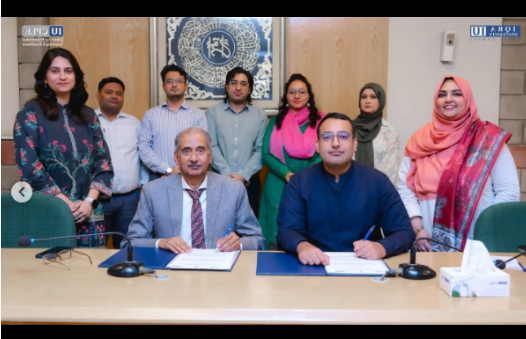
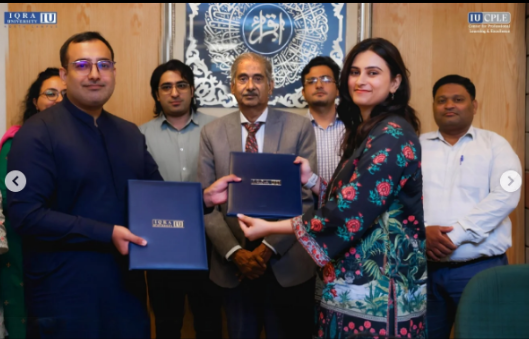
Iqra University has signed an MoU with Education Unlimited to jointly offer professional certification programmes in high-demand fields, including Hospital Management, Dermal Sciences, Cognitive Behaviour Therapy (CBT), Fitness Training, and wellness education. This collaboration combines academic expertise with industry-focused training to promote professional development and career-oriented learning opportunities in healthcare and allied disciplines.
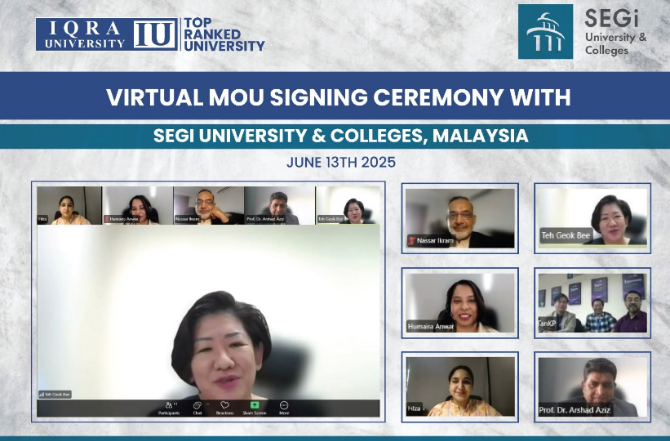
Iqra University signed a Memorandum of Understanding (MoU) with SEGi University & Colleges, Malaysia, on 13 June 2025 to strengthen international academic collaboration. The partnership promotes student and faculty mobility, joint research supervision, collaborative webinars, workshops and conferences, and international research opportunities, fostering cross-border knowledge exchange and academic cooperation.
Initiation and Participation in Cross-Sectoral Dialogue on the SDGs
Iqra University actively promotes cross-sectoral dialogue on the Sustainable Development Goals (SDGs) by engaging with government institutions, non-governmental organisations, industry, and other stakeholders through conferences, seminars, and collaborative initiatives. These engagements facilitate knowledge sharing, strengthen partnerships, and encourage collective action towards achieving the SDGs.
Iqra University signed a Memorandum of Understanding (MoU) with SEGi University & Colleges, Malaysia, on 13 June 2025 to strengthen international academic collaboration. The partnership promotes student and faculty mobility, joint research supervision, collaborative webinars, workshops and conferences, and international research opportunities, fostering cross-border knowledge exchange and academic cooperation.
Principle for Responsible Management Education (PRME)
Iqra University promotes international collaboration in advancing the Sustainable Development Goals (SDGs) through partnerships with international academic institutions and organisations. These collaborations provide opportunities for joint research, knowledge exchange, and the sharing of expertise and data relevant to monitoring and measuring progress towards the SDGs.
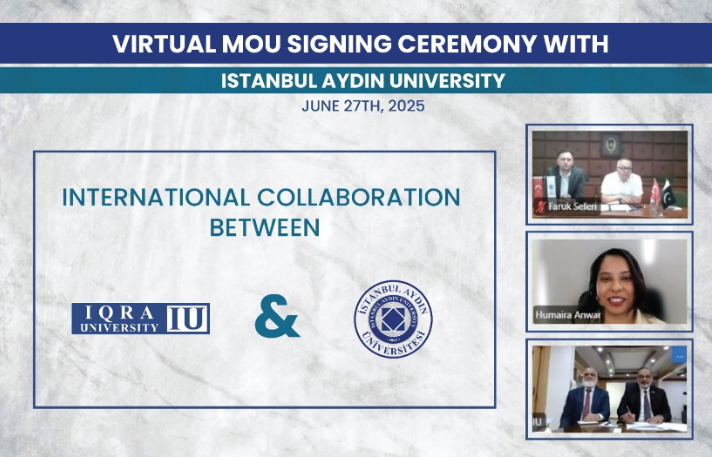
Iqra University has signed a Memorandum of Understanding (MoU) with Istanbul Aydın University, Türkiye, to strengthen international academic collaboration through joint research, faculty exchange, and knowledge sharing. This partnership provides opportunities for collaborative research and international engagement, supporting the exchange of expertise and potential collaboration in gathering and measuring data relevant to the Sustainable Development Goals (SDGs).
International Collaboration and Research for Developing SDG Best Practices
Iqra University promotes international collaboration and research to review comparative approaches and identify effective practices for addressing the Sustainable Development Goals (SDGs). Through partnerships with international academic institutions, the University encourages knowledge exchange, collaborative research, and the adoption of relevant international best practices to strengthen its contribution towards achieving the SDGs.
Collaboration with NGOs to Advance the SDGs through Student Volunteering, Research, and Educational Resources
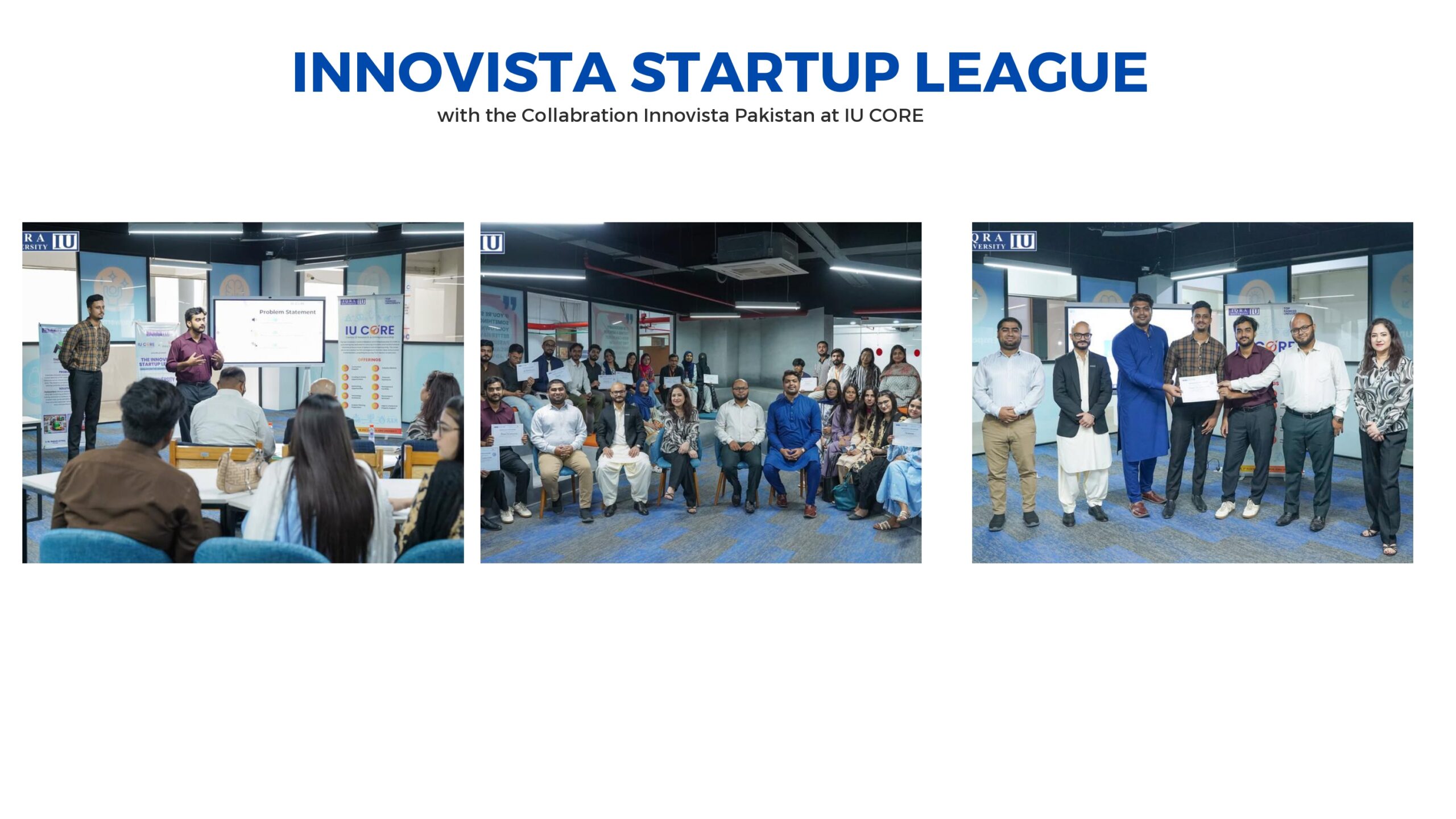
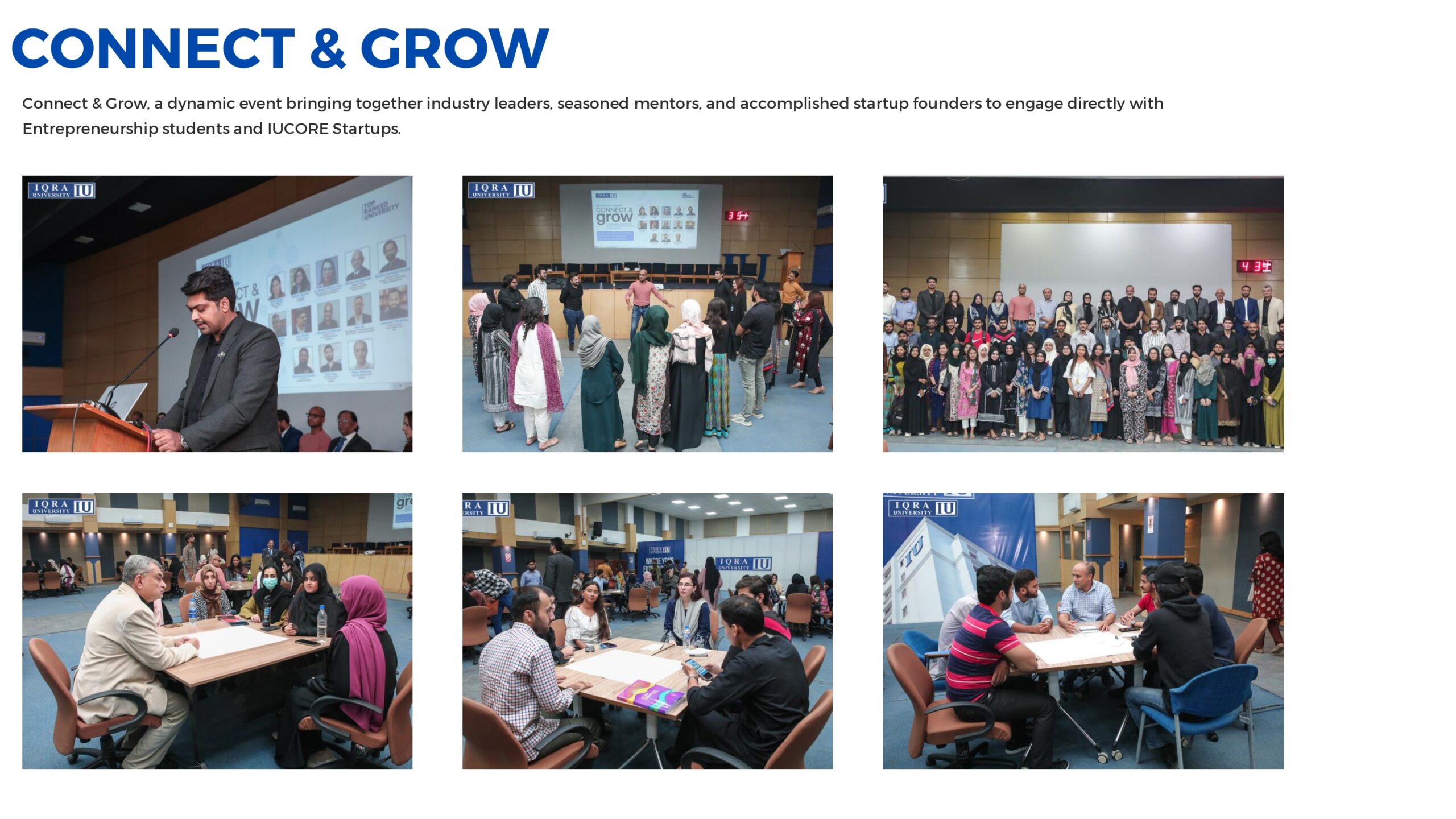
Iqra University collaborates with non-governmental organisations (NGOs) to advance the Sustainable Development Goals (SDGs) through student volunteering programmes, collaborative research, and the development of educational resources. These partnerships encourage student engagement in community initiatives, promote research addressing societal challenges, and support the dissemination of knowledge to raise awareness and contribute to sustainable development.
University-Wide Commitment to Education for the SDGs and Sustainability-Focused Courses
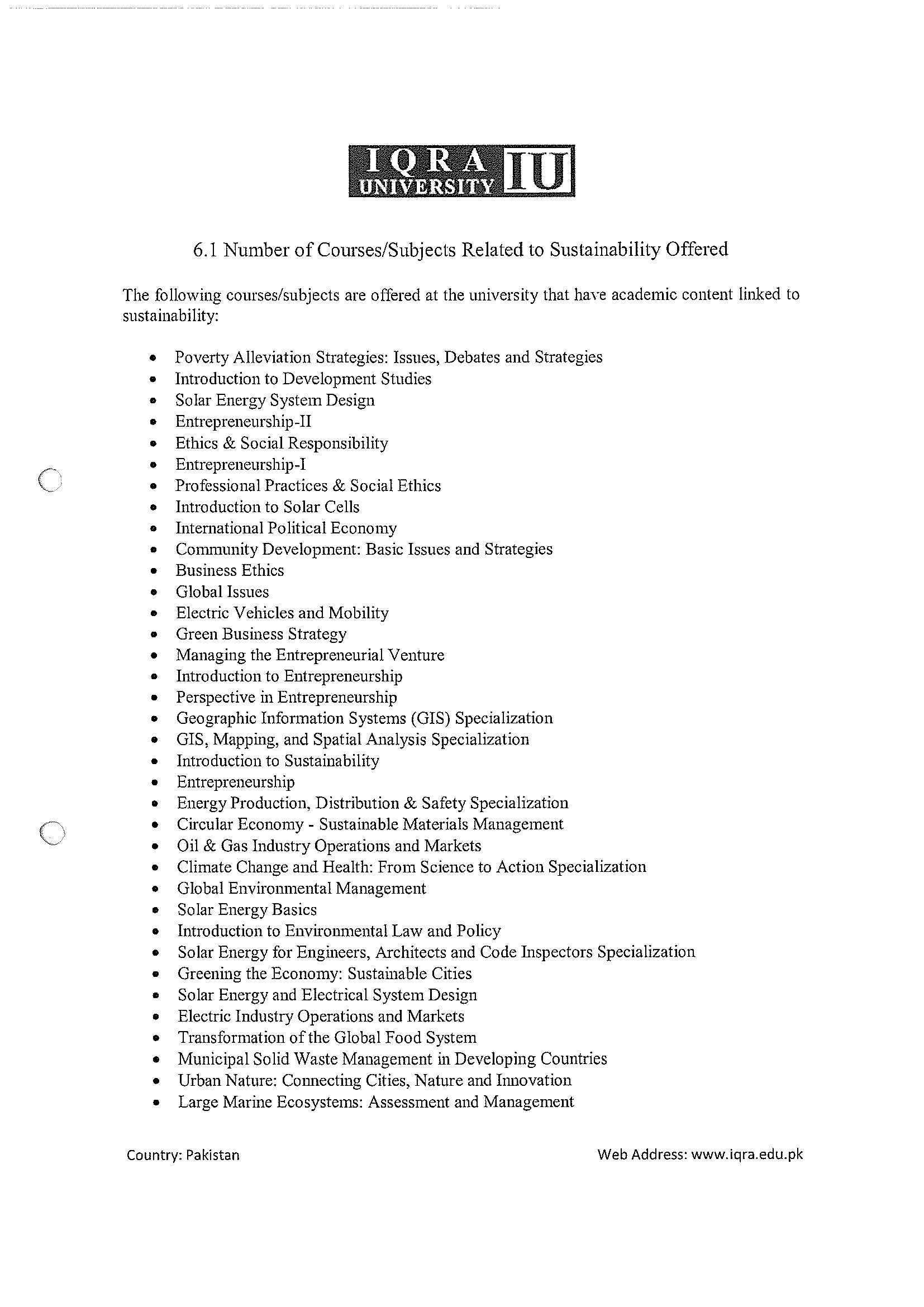
Iqra University promotes education for the Sustainable Development Goals (SDGs) by encouraging the integration of sustainability-related themes into teaching, learning, and academic activities. The University aims to enhance students’ understanding of global sustainability challenges through relevant curriculum content and dedicated courses addressing sustainability and the SDGs, fostering responsible citizenship and awareness of sustainable development.
Dedicated SDG Educational Outreach Activities for Alumni and the Wider Community
Iqra University promotes awareness and understanding of the Sustainable Development Goals (SDGs) through dedicated educational outreach activities for the wider community. These initiatives extend beyond the University to engage alumni, local communities, providing opportunities for learning, awareness, and knowledge sharing on sustainability-related issues and encouraging their contribution towards sustainable development.
Assessment and Measurement of Students’ Sustainability Literacy
Iqra University recognises the importance of sustainability literacy in developing students’ understanding of key sustainability concepts and challenges. The University aims to assess students’ awareness, knowledge, and understanding of sustainability through relevant academic activities, learning assessments, and educational initiatives, encouraging them to apply sustainability principles in their academic and personal lives.